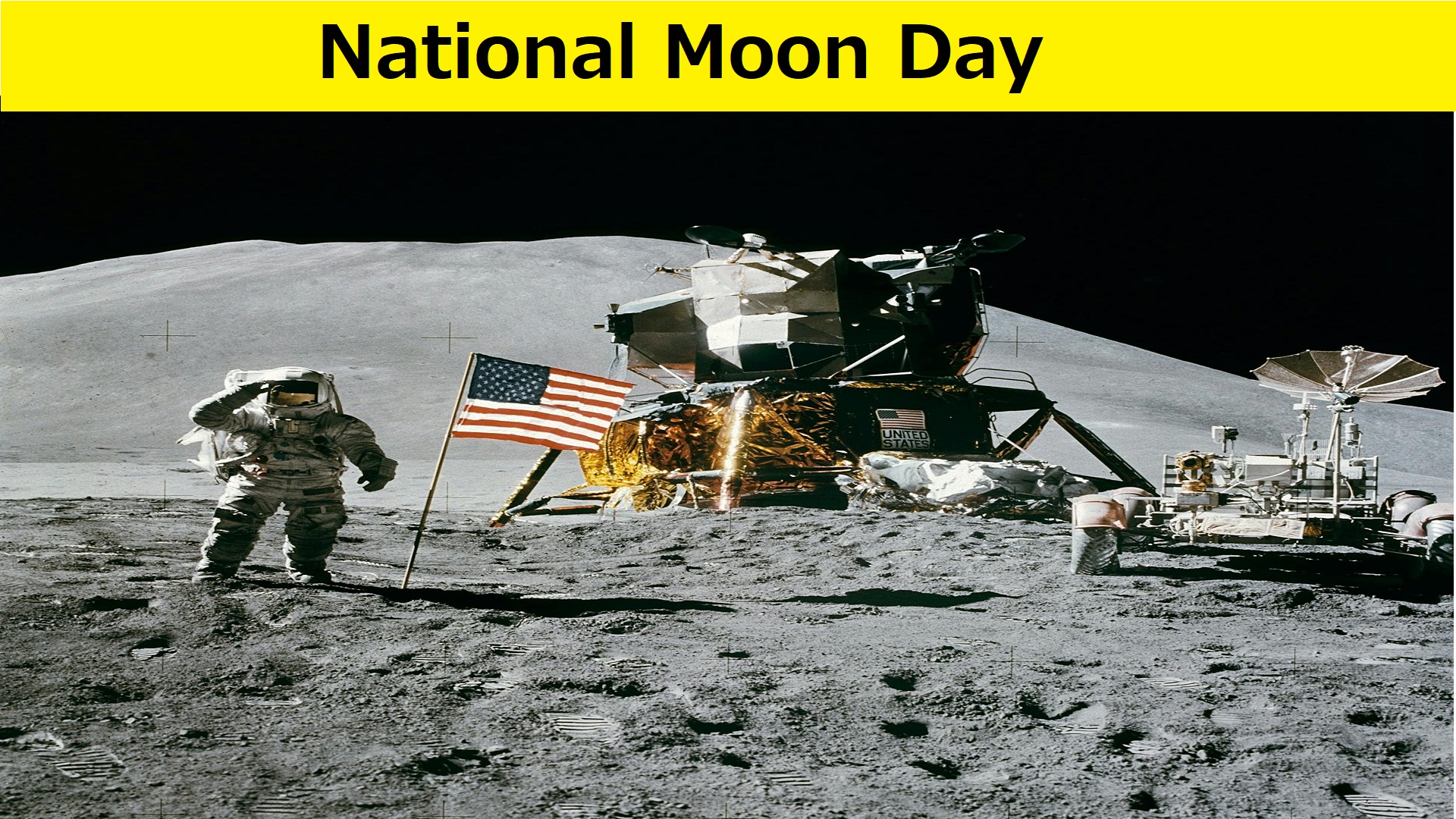
National Moon Day
National Moon Day as International Moon Day, a United Nations-designated international day to be observed annually on 20 July. National Moon Day is celebrated on
July 20th to commemorate the first Moon landing by humans during the Apollo 11 mission in 1969 “That’s one small step for [a] man, one giant leap for mankind.”
On
July 20, 1969, the world stood still as
Neil Armstrong became the first human to set foot on the
Moon. Every year since,
National Moon Day commemorates this extraordinary achievement in human history.
National Moon Day Also recognized as International Moon Day (by the UN)
National Moon Day Date: July 20 every year.
📜 History of National Moon Day 🌕
🚀 The Apollo 11 Moon Landing
- On July 20, 1969, NASA’s Apollo 11 mission successfully landed astronauts Neil Armstrong and Buzz Aldrin on the Moon.
- Millions watched live on TV as Armstrong took his historic step and planted the American flag on lunar soil.
- The third astronaut, Michael Collins, remained in orbit in the command module, ensuring the team’s safe return.
🏛️ Birth of National Moon Day
- National Moon Day was established to celebrate this pivotal moment in space exploration.
- In the U.S., July 20 is observed unofficially by enthusiasts, educators, and space organizations.
- In 2021, the United Nations officially recognized July 20 as International Moon Day to mark the anniversary and promote peaceful exploration of outer space.
🌍 United Nations & Global Moon Observance
- Through UN Resolution 76/76, International Moon Day promotes:
- Space education
- Innovation
- Global cooperation in space science and policy
🌍 Where Is National Moon Day Celebrated?
🇺🇸 United States
- Most actively observed in the U.S. with:
- NASA-hosted events
- Museum exhibits
- School programs
- Public telescope nights
🌐 Global Celebrations
- International Moon Day is gaining traction globally with participation from:
- European Space Agency (ESA)
- Indian Space Research Organisation (ISRO)
- China National Space Administration (CNSA)
- Private space firms and STEM schools
- Astronomy clubs and planetariums across India, Japan, Germany, Brazil, and more.
🌠 Why Is July 20 Celebrated as Moon Day?
July 20 marks the
exact date of the
Apollo 11 Moon landing in 1969. This milestone:
- Was humanity’s first successful manned mission to the Moon.
- Proved that long-distance space travel was possible.
- Inspired generations to look skyward in wonder and possibility.
- Became a symbol of innovation, perseverance, and global unity.
🗓️ July 20 is now seen as a tribute to space exploration and the future of human spaceflight.
🌙 How to Celebrate National Moon Day
🔭 1. Stargazing & Moon Watching
Grab a telescope or binoculars and observe the Moon. Even with the naked eye, you can spot craters and lunar seas.
🏛️ 2. Visit a Science Museum or Planetarium
Many science centers host
special exhibits, workshops, or
moon landing documentaries.
👨🚀 3. Watch Apollo 11 Footage
Relive history by watching original footage or modern documentaries like:
- Apollo 11 (2019 documentary)
- For All Mankind (Apple TV+)
- The Moon Landing: The Lost Tapes
📚 4. Read About the Space Race
Explore books and stories about the
Apollo missions,
NASA history, and
future Moon missions (like Artemis Program).
🎨 5. Host a Moon-Themed Party
Mooncakes, glow-in-the-dark decor, trivia games, and sci-fi movie marathons make for an out-of-this-world celebration.
🚀 6. Join a Local Astronomy Club
Participate in community events, night sky observations, or educational talks.
🌌 7. Engage Kids with Space Crafts
Build cardboard rockets, paper moon craters, or 3D models of the solar system at home or in school.
🧠 Frequently Asked Questions (FAQs)
❓ When is National Moon Day celebrated?
Every year on
July 20, marking the
Apollo 11 Moon landing anniversary.
❓ Is it the same as International Moon Day?
Yes. In 2021, the
UN officially recognized July 20 as
International Moon Day, expanding the observance globally.
❓ Who first walked on the Moon?
Neil Armstrong on July 20, 1969, followed by
Buzz Aldrin.
❓ Why is the Moon important?
The Moon affects tides, provides insights into Earth’s history, and may serve as a
launchpad for future space missions to Mars and beyond.
❓ Are we going back to the Moon?
Yes! NASA’s
Artemis Program aims to return humans to the Moon—
including the first woman and person of color—by the late 2020s.
❓ Are there any Moon missions from other countries?
Yes.
India’s Chandrayaan-3,
China’s Chang’e program, and
ESA missions are actively exploring the Moon.
Fun Moon Facts
- The Moon is about 1/6th the gravity of Earth—that’s why astronauts bounce!
- It’s 238,855 miles (384,400 km) away from Earth.
- The Moon has no atmosphere, so footprints from 1969 are still there.
- A day on the Moon (from sunrise to sunrise) lasts about 29.5 Earth days.
National Moon Day isn’t just about remembering the past—it’s about
inspiring the future.
One small step for man, one giant leap for mankind. 🌕🚀🌍 Celebrate National Moon day 2025
Related