
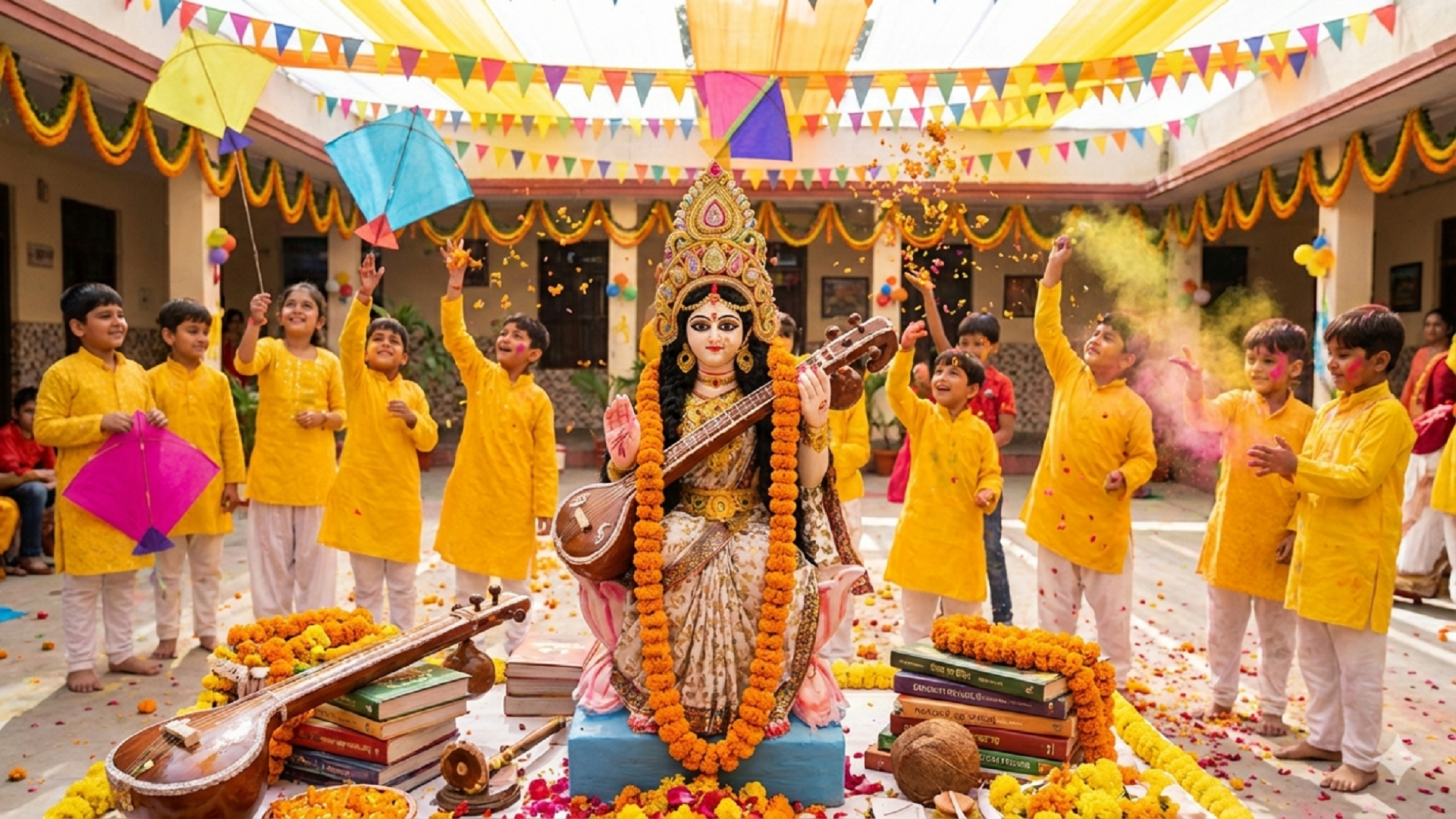
Saraswati Puja 2026: Know Its Significance, Date, Muhurat & All You Need to Celebrate
Saraswati Puja 2026: Know Its Significance, Date, Muhurat & All You Need to Celebrate
Saraswati Puja 2026 — also known as Basant Panchami or Vasant Panchami — is one of the most joyous and spiritually meaningful festivals in the Hindu calendar. Dedicated to Goddess Saraswati, the divine embodiment of knowledge, wisdom, arts, and learning, this festival marks the arrival of spring (Basant Ritu) and celebrates the pursuit of education, creativity, and intellectual growth.
In this comprehensive guide, you’ll learn:
- The Saraswati Puja 2026 date
- Auspicious Muhurat timings
- Religious significance
- Cultural rituals and celebrations across India
- Tips on how to perform the puja at home or in school
- Traditions from different regions
- Common practices, beliefs, and FAQs
Let’s dive deep into why Saraswati Puja is celebrated with such devotion and joy across communities.
What Is Saraswati Puja?
Saraswati Puja is a Hindu festival dedicated to Goddess Saraswati, the deity of knowledge, music, arts, science and learning. It is traditionally observed on the fifth lunar day (Panchami) of the Hindu month of Magha (January–February), a day also known as Basant Panchami.
Goddess Saraswati is revered as the source of intellect, creativity and fine arts, and devotees seek her blessings for success in education, creative pursuits, communication, artistic expression, and spiritual insight.
Saraswati Puja 2026: Date & Panchami Tithi
In 2026, Saraswati Puja falls on Friday, 23 January 2026. This date corresponds to the fifth day (Panchami Tithi) of the Magha month.
According to traditional Hindu calendar calculations:
- Panchami Tithi Begins: 2:28 AM on 23 January 2026
- Panchami Tithi Ends: 1:46 AM on 24 January 2026
Because the Panchami lunar day remains active through most of 23 January, this is the day devotees across India and Nepal observe Saraswati Puja.
Saraswati Puja 2026 Muhurat (Auspicious Time)
A muhurat indicates a blessed period believed to enhance the spiritual impact of rituals. On Saraswati Puja 2026, the most auspicious time to perform the worship is during the forenoon hours on 23 January.
Saraswati Puja 2026 Muhurat Details
- Auspicious Muhurat: From 7:13 AM to 12:33 PM (approx.) on 23 January 2026
- Some local calendars may list the window as 7:15 AM – 12:50 PM depending on region and sunrise time.
This period is considered ideal for worshipping Goddess Saraswati while Panchami Tithi and Purvahna Kala (morning time) are aligned — believed to bring maximum positive energy and divine blessings for knowledge and learning.
Why Saraswati Puja Is Celebrated
Saraswati Puja is more than just a festival — it is a cultural and spiritual celebration of learning, creativity, and the human quest for truth.
Here’s why it holds deep significance:
1. Honoring the Goddess of Knowledge
Goddess Saraswati is worshipped as the source of:
- Vidya (Knowledge)
- Vani (Speech & Expression)
- Music & Arts
- Wisdom & Focus
Devotees believe offering prayers to her clears the mind of ignorance and strengthens intellectual clarity.
2. Arrival of Spring – Basant Panchami
The festival also heralds the onset of spring, a season associated with freshness, growth, and renewal. Bright yellow — the color of mustard fields in bloom — is worn and offered to symbolize energy, creativity, and optimism.
3. Cultural & Educational Importance
- In schools and colleges, students pray for academic success.
- Akshar-Abhyasam or Vidya-Arambham (initiation of formal learning) is performed for young children.
How Is Saraswati Puja Celebrated?
Common Rituals
On Saraswati Puja 2026, families and communities follow a blend of devotional and cultural practices:
- Clean the puja area and set up the idol or picture of Goddess Saraswati
- Arrange books, musical instruments, pens, and educational tools near the deity as symbolic offerings
- Decorate with yellow flowers (marigolds, chrysanthemums) — a color tied to learning and prosperity
- Offer traditional sweets (kesar bhaat, boondi ladoo) and fruits such as bananas and apples
- Light incense sticks and lamps in prayer for wisdom and intellectual success
Students often keep their textbooks and instruments near the deity before touching them — a way of seeking blessings before study or performance.
Traditional Puja Samagri (Items)
Here are commonly used items for Saraswati Puja rituals:
- Idol or image of Goddess Saraswati
- Yellow cloth and fresh yellow flowers
- Fruits and sweets
- Incense sticks and diya (lamp)
- Books, notebooks, pens
- Musical instruments like veena (optional but symbolic)
- Turmeric, kumkum, and sandalwood paste
Saraswati Puja in Different Regions
Though Saraswati Puja is widely celebrated across India and Nepal, customs vary by region.
North India
- People wear bright yellow clothes
- Some fly kites to celebrate Basant’s arrival
- Schools and temples conduct group prayers and pushpanjali (flower offerings)
West Bengal
- Elaborate community pujas are organized
- Cultural programs feature recitations, music, and akhra (debates or academic discussions)
Southern States
- Known as Sri Panchami
- Emphasis on learning rituals and traditional worship
- Rituals may vary slightly based on local customs
Symbolism of Yellow and Spring
Yellow — seen in clothes, flowers, foods, and decorations — represents:
- Prosperity
- Joy
- Intellectual brilliance
- Blessings of nature’s renewal
Spring is culturally tied to creativity and rejuvenation, making this festival a perfect blend of nature, culture, and spiritual celebration.
Saraswati Puja 2026: Top Things You Should Know
- Date: Friday, 23 January 2026
- Most Auspicious Muhurat: 7:13 AM – 12:33 PM (approx.)
- Panchami Tithi Begins: 2:28 AM on 23 January
- Panchami Tithi Ends: 1:46 AM on 24 January
- Main Deity: Goddess Saraswati — for knowledge and learning (
Saraswati Puja 2026 celebrates the triumph of knowledge and creativity at a time when nature itself begins to blossom. Whether you are a student praying for academic success, a parent initiating your child into formal learning, or simply someone seeking wisdom and artistic inspiration, this festival offers a beautiful way to connect with inner clarity and cultural heritage.