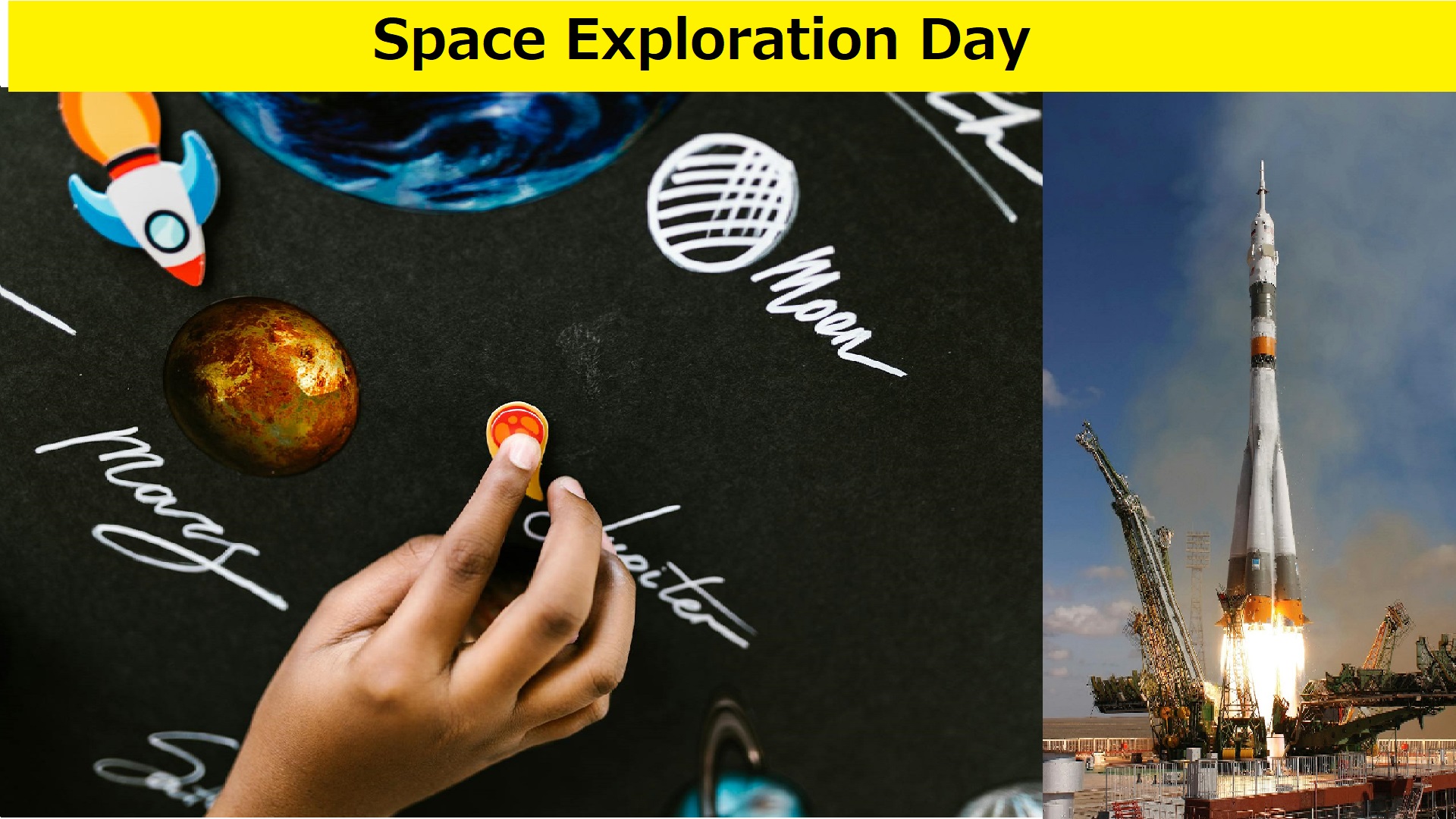
Space Exploration Day
Space Exploration Day commemorates the July 20th anniversary of man’s first historic landing and walk on the surface of another celestial body. From Sputnik to the Moon, Mars rovers to the James Webb Telescope—space exploration has fueled dreams, inspired innovation, and brought humanity closer to the stars.
Space Exploration Day, celebrated annually on
July 20, honors the monumental achievements in space science and encourages continued curiosity about the cosmos.
Space Exploration Day Date: July 20 every year
Space Exploration Day Also known as National Space Exploration Day (U.S.)
📜 History of Space Exploration Day 🚀
Space Exploration Day was created to commemorate one of the most significant milestones in human history: the first Moon landing by
Apollo 11 on
July 20, 1969.
🛰️ Origins:
- The holiday was officially declared in the United States by President Ronald Reagan in 1984, recognizing the role of space science in national progress.
- It honors the efforts of NASA, astronauts, engineers, and scientists who have contributed to advancing our understanding of space.
🌕 Why July 20?
Because it marks the day when:
- Neil Armstrong became the first human to walk on the Moon.
- The United States solidified its place in the Space Race.
- Space exploration transitioned from dream to reality.
🌍 Where Is Space Exploration Day Celebrated?
🇺🇸 United States
- Most actively celebrated in the U.S., especially by:
- NASA
- Science museums
- Schools and STEM organizations
- Space enthusiasts nationwide
🌐 Global Recognition
Although not an official international holiday,
Space Exploration Day is acknowledged by:
- Global space agencies (ESA, ISRO, CNSA)
- Science educators around the world
- Online communities and astronomy clubs
It shares the spotlight with
International Moon Day (also on July 20, recognized by the United Nations), giving it
global relevance.
🚀 Why Is July 20 Celebrated as Space Exploration Day in the U.S.?
July 20, 1969, is the date when
Apollo 11 successfully landed on the Moon, fulfilling President John F. Kennedy’s vision of sending a man to the Moon and returning him safely to Earth.
This achievement:
- Demonstrated technological prowess
- Marked a turning point in the Cold War-era space race
- Showed what humanity could achieve through collaboration, courage, and innovation
Thus, July 20 became
symbolic of all space achievements, and was chosen to represent
Space Exploration Day to honor the past, present, and future of space discovery.
🎉 How to Celebrate Space Exploration Day
🌌 1. Visit a Space Museum or Observatory
Explore space artifacts, Apollo mission suits, and Moon rocks. Great venues include:
- Smithsonian National Air and Space Museum (Washington, D.C.)
- NASA’s Kennedy Space Center (Florida)
- Space Center Houston (Texas)
🔭 2. Stargazing & Telescope Viewing
Organize or join a night of skywatching. Try spotting:
- The Moon
- Saturn’s rings
- Jupiter’s moons
- International Space Station (ISS) flyovers
📺 3. Watch Space Documentaries or Films
Relive the excitement of missions through:
- Apollo 11 (2019)
- Hidden Figures (2016)
- The Martian, Interstellar, or First Man
👩🚀 4. Participate in STEM & Space Activities
Engage kids or students with:
- Rocket-building kits
- Solar system models
- VR tours of the ISS or Mars rovers
- NASA’s online educational resources
📚 5. Learn About Current Missions
Follow updates from:
- NASA’s Artemis Program
- Mars Perseverance Rover
- James Webb Space Telescope
- Private space companies like SpaceX & Blue Origin
🧑🚀 6. Dress Like an Astronaut
Have fun with themed outfits, cosplay, or school spirit days. Great for kids and classrooms.
🧠 Frequently Asked Questions (FAQs)
❓ When is Space Exploration Day celebrated?
Every year on
July 20.
❓ Why was it created?
To honor the achievements of human spaceflight—especially the
Apollo 11 Moon landing—and inspire continued interest in space.
❓ Who celebrates Space Exploration Day?
- Primarily celebrated in the United States
- Also recognized by global space enthusiasts, science educators, and institutions
❓ What’s the difference between Space Exploration Day and Moon Day?
Both fall on July 20:
- Space Exploration Day focuses on the broader history and future of space travel.
- Moon Day specifically commemorates the first Moon landing.
❓ Are we going back to the Moon?
Yes! NASA’s
Artemis Program plans to land astronauts on the Moon again, including the
first woman and person of color, by the late 2020s.
❓ What’s next for space exploration?
- Mars missions
- Space tourism
- Lunar bases
- Asteroid mining
- Deep space telescopes and planetary defense systems
🌠 Fun Space Facts
- The Apollo 11 mission took 8 days from Earth to Moon and back.
- The Moon has no atmosphere, so footprints from 1969 are still intact.
- The Hubble Space Telescope has traveled over 3 billion miles in orbit since 1990.
- There are over 4,000 confirmed exoplanets discovered outside our solar system.
Space Exploration Day reminds us of how far we’ve come—and how much further we can go. From the Moon to Mars, and possibly beyond, our journey through the stars continues to define what’s possible when
science, imagination, and courage align.
So on
July 20, whether you’re peering through a telescope, watching the stars, or building a rocket with your child—
celebrate humanity’s greatest leap into the unknown. 🚀✨
Related