
What Makes a Moka Pot and Espresso Machine Different?
What Makes a Moka Pot and an Espresso Machine Different?
What Makes a Moka Pot and an Espresso Machine Different?
When people ask what makes a moka pot and espresso machine different, they’re really trying to understand why both produce strong coffee but deliver noticeably different results. While the two brewing methods share Italian roots and rely on pressure to extract flavor, they are designed for very different purposes.
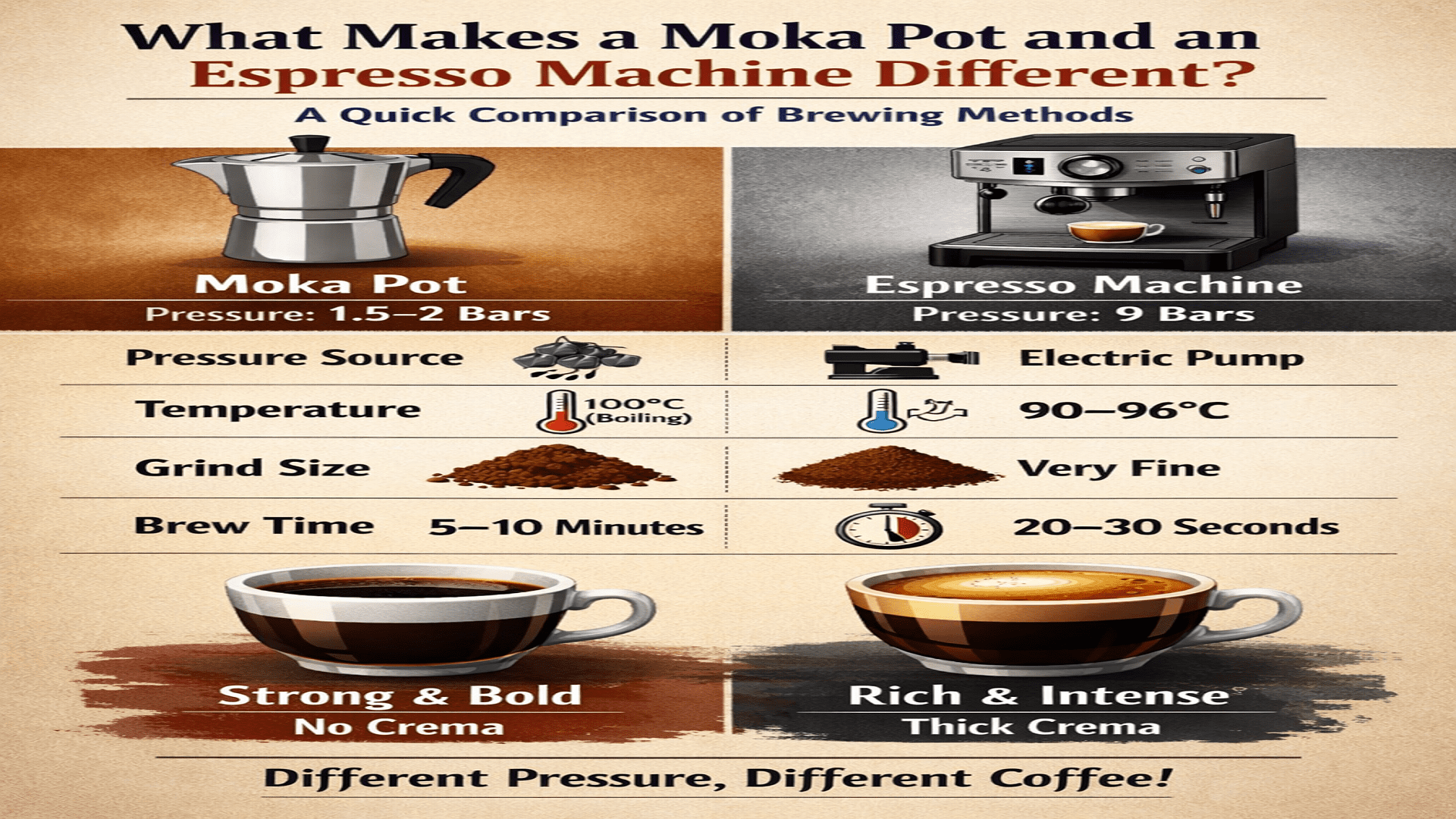
The main difference between a moka pot and an espresso machine is brewing pressure. An espresso machine uses an electric pump or manual lever to force hot water through finely ground coffee at around 9 bars of pressure. This high pressure extracts coffee quickly and efficiently, producing a small, concentrated shot with a rich body and a thick layer of crema.
A moka pot, on the other hand, brews coffee using steam pressure created by boiling water, reaching only about 1.5 to 2 bars. This lower pressure results in a strong, bold cup of coffee, but it lacks the viscosity, crema, and complexity of true espresso. Moka pot coffee is more concentrated than drip coffee, yet lighter and more rustic than espresso.
A complete, practical guide for coffee lovers who want clarity—not confusion.
If you’ve ever wondered why coffee from a moka pot tastes different from café espresso—even when you use the same beans—you’re asking the right question. While both brewing methods rely on pressure to push hot water through coffee grounds, they are fundamentally different tools designed for different results.
The core difference is pressure:
- Espresso machines brew at ~9 bars of pressure
- Moka pots operate at ~1.5–2 bars
That single fact explains most of the differences in taste, texture, technique, cost, and even culture. But there’s much more going on under the hood. This article breaks it all down clearly, honestly, and without marketing hype—so you can choose the method that actually fits your taste and lifestyle.
 Understanding the Basics
What Is a Moka Pot?
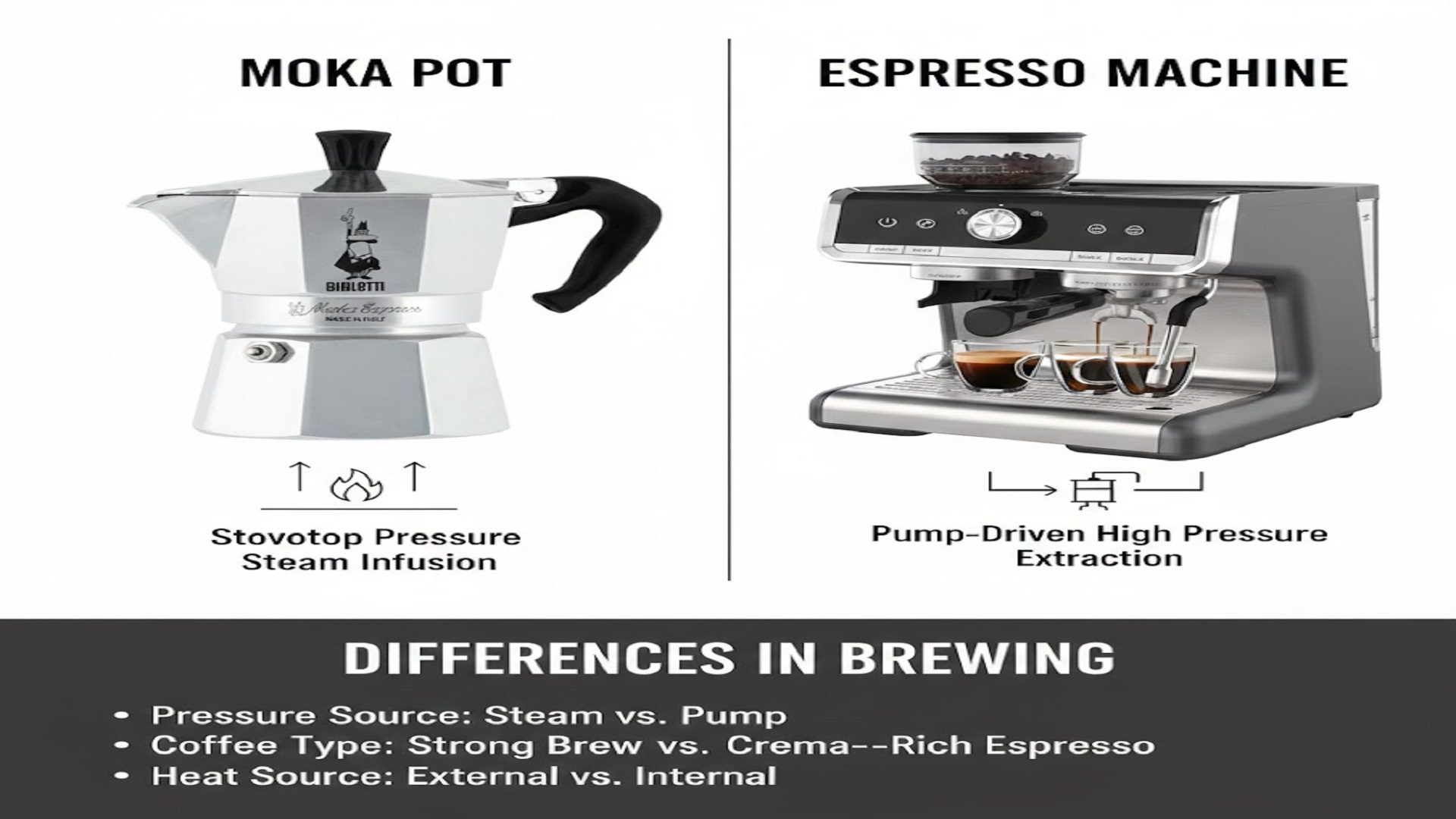
A moka pot is a stovetop coffee brewer invented in Italy in the 1930s. It consists of three chambers:
- Bottom chamber – water
- Middle basket – ground coffee
- Top chamber – brewed coffee
When heated, water in the bottom chamber boils, creating steam pressure that pushes hot water up through the coffee grounds and into the top chamber.
Key takeaway: A moka pot uses steam pressure, not mechanical force.
What Is an Espresso Machine?
An espresso machine is a pressure-driven brewing system designed specifically to extract espresso. It forces hot water through finely ground coffee using:
- An electric pump (most modern machines), or
- A manual piston (lever machines)
This controlled pressure extracts oils, dissolved solids, and gases in a very short time, producing a small but intense beverage.
Key takeaway: Espresso machines use mechanical pressure with precise control.
The Science of Pressure (Why It Matters)
Pressure determines how much and what kind of material is extracted from coffee grounds.
| Brewer | Pressure Range |
|---|---|
| Moka pot | ~1.5–2 bars |
| Espresso machine | ~9 bars |
According to the Specialty Coffee Association (SCA), true espresso requires high pressure to emulsify coffee oils and trap carbon dioxide, creating crema and a syrupy body. A moka pot simply cannot reach this pressure threshold.
Result:
- Moka pot coffee ≠ espresso
- It’s closer to a very strong, concentrated brewed coffee
Technical & Brewing Differences (Explained Clearly)
1. Pressure Source
Espresso Machine
- Uses a pump or piston
- Pressure is consistent and adjustable
- Coffee puck provides resistance
Moka Pot
- Pressure comes from boiling water turning into steam
- Pressure rises unevenly
- No active control mechanism
Why this matters: Consistent pressure equals consistent extraction. Espresso machines win here—by design.
2. Water Temperature
Espresso Machines
- Brew between 90°C and 96°C
- Temperature is actively regulated
- Prevents burning delicate flavor compounds
Moka Pots
- Water must reach 100°C (boiling) to generate steam
- No temperature control
- Higher risk of over-extraction and bitterness
The SCA Brewing Handbook confirms that excessive temperature increases bitterness and harsh flavors—one reason moka coffee can taste more “toasty.”
3. Grind Size
| Brewer | Ideal Grind |
|---|---|
| Espresso machine | Very fine (powdery) |
| Moka pot | Medium-fine (slightly coarser) |
Using espresso-fine coffee in a moka pot can:
- Block water flow
- Trigger the safety valve
- Create uneven extraction
This isn’t a technique issue—it’s physics.
4. Brew Time
Espresso
- 20–30 seconds
- High extraction efficiency
Moka Pot
- 5–10 minutes total
- Gradual heating + extraction
Longer exposure at higher temperatures changes the chemical profile of the brew, which is why moka coffee tastes bolder but less nuanced.
Taste and Texture Comparison
Concentration
- Espresso:
Extremely concentrated; roughly 5–8× stronger than drip coffee - Moka pot coffee:
Bold and intense; about 2–3× stronger than drip
This aligns with brewing ratio standards outlined by the SCA.
Crema (or Lack of It)
Espresso
- Thick, golden crema
- Created by emulsified oils and trapped CO₂
- A result of high pressure
Moka Pot
- May produce light foam
- Dissipates quickly
- Not true crema
If you see persistent crema from a moka pot, it’s usually due to fresh coffee degassing—not authentic espresso crema.
Flavor Profile
| Aspect | Espresso | Moka Pot |
|---|---|---|
| Body | Syrupy, viscous | Thinner |
| Complexity | High | Moderate |
| Bitterness | Balanced | Often higher |
| Aroma | Intense, layered | Bold, rustic |
Neither is “better”—they’re just different experiences.
Practical Considerations (Real-Life Factors)
Cost
- Moka pot: $20–$50
- Home espresso machine: $200–$2,000+
The price gap reflects engineering complexity—not marketing fluff.
Skill Level
Moka Pot
- Beginner-friendly
- Minimal technique required
- Hard to ruin beyond repair
Espresso Machine
- Steep learning curve
- Requires dialing in grind, dose, tamp, and time
- Rewards precision—but punishes shortcuts
Maintenance
Moka Pot
- Rinse with water
- Replace gasket occasionally
- Can last decades
Espresso Machine
- Regular descaling
- Group head cleaning
- Pump and seal maintenance
According to manufacturer maintenance guidelines and industry best practices, neglect shortens espresso machine lifespan significantly.
Energy Use & Portability
- Moka pots work on gas, electric, or induction stoves
- Espresso machines require electricity and counter space
If portability or travel matters, moka pots are unmatched.
Cultural Context (Why Both Exist)
In Italy, moka pots are everyday household staples, while espresso is often enjoyed at cafés. The two methods evolved to serve different social and economic needs, not to compete directly.
Understanding this helps avoid unrealistic expectations—especially the idea that moka pots should “replace” espresso machines.
Which One Should You Choose?
Choose a moka pot if you:
- Want bold coffee without complexity
- Prefer simplicity and low cost
- Enjoy hands-off brewing
- Don’t need true espresso
Choose an espresso machine if you:
- Want café-style drinks at home
- Love experimenting with variables
- Drink milk-based beverages often
- Are willing to invest time and money
FAQs: Moka Pot vs Espresso Machine
Is moka pot coffee espresso?
No. Despite its strength, moka pot coffee does not meet the pressure requirements for espresso as defined by the Specialty Coffee Association.
Can I make lattes with moka pot coffee?
Yes, but the result will differ. Milk drinks will be less creamy and less intense than those made with espresso.
Why does moka pot coffee taste bitter?
Common reasons include:
- Overheating
- Too fine a grind
- Leaving the pot on heat too long
Does crema mean better coffee?
Not necessarily. Crema indicates pressure and freshness, but flavor balance matters more than appearance.
Which has more caffeine?
Per serving, espresso has slightly more caffeine. Per volume, moka pot coffee can deliver more caffeine due to larger serving size.
The moka pot and espresso machine are not rivals—they’re tools designed for different goals. One prioritizes accessibility and tradition; the other precision and intensity.
Once you understand the role of pressure, temperature, and extraction, the choice becomes simple—and personal.
And honestly? Many coffee lovers happily own both. ☕