
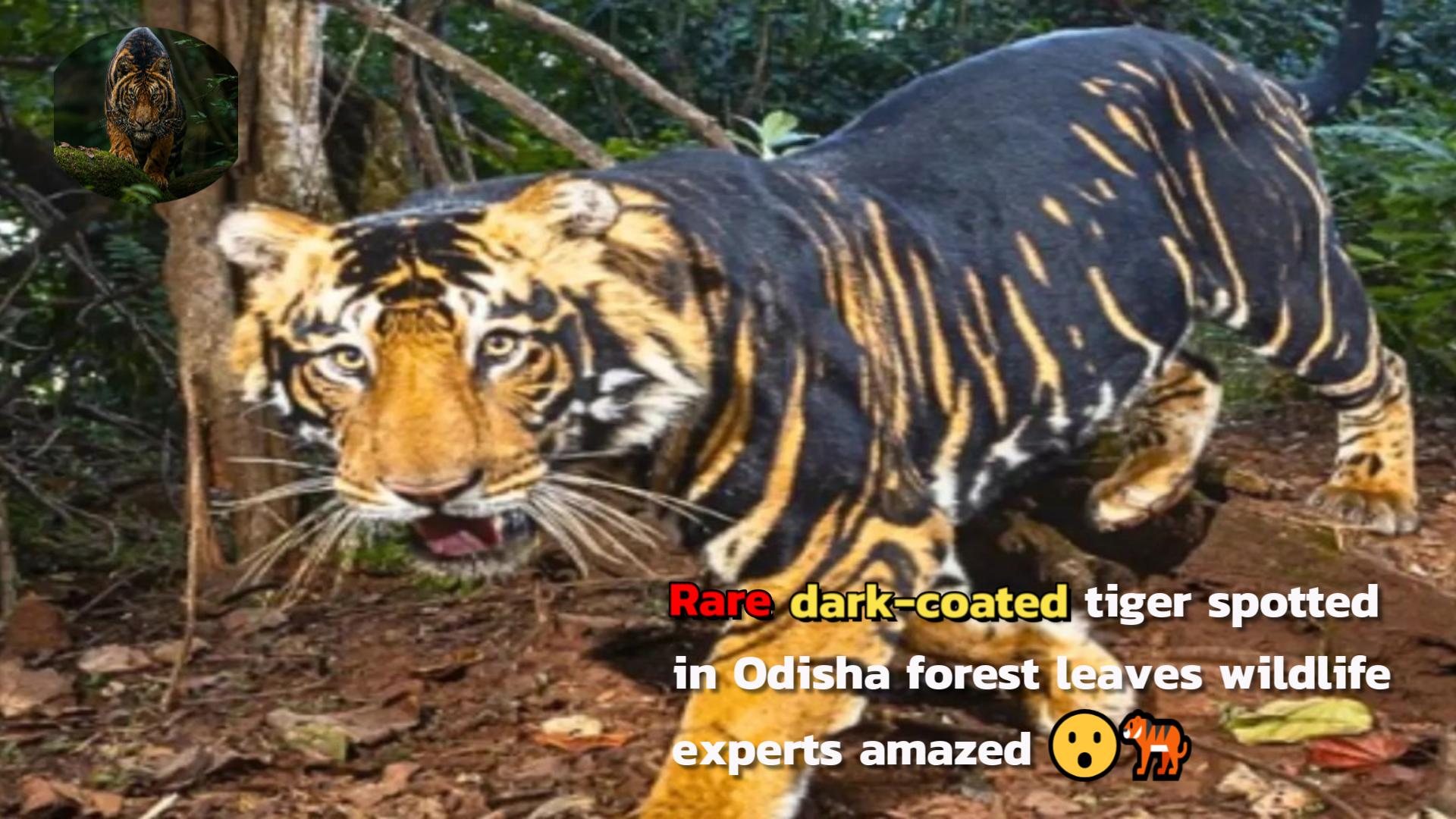
Rare Dark-Coated Tiger Spotted in Odisha: The Secrets of Similipal’s “Black Tigers”
Rare Dark-Coated Tiger Spotted in Odisha: The Secrets of Similipal’s “Black Tigers”
Wildlife experts and nature enthusiasts are buzzing after a rare dark-coated tiger was recently spotted in Odisha’s Similipal Tiger Reserve. Looking more like a shadow than a traditional predator, this animal’s appearance is a striking departure from the classic orange-and-black Bengal tiger.
What Is a Pseudo-Melanistic Tiger?
While it may look like a new species, researchers clarify that this is a Bengal tiger carrying a rare genetic trait known as pseudo-melanism.
Unlike true melanism (which results in an entirely black coat, like a black panther), pseudo-melanism causes the tiger’s black stripes to widen and fuse together. This creates an “eerie” effect where the dark pigment dominates, though traces of orange fur often remain visible beneath the surface.
Why Similipal Tiger Reserve is Unique
Similipal is currently the only habitat on Earth where these black tigers are consistently documented in the wild. Key facts about this phenomenon include:
-
Genetic Isolation: The trait is more common here because the population is geographically isolated.
-
Recurring Sightings: While solid-black tigers are legendary myths, the “dark-coated” pattern shows up repeatedly in Similipal’s dense forests.
-
Scientific Interest: Wildlife experts monitor these tigers closely to understand how genetic mutations manifest in wild populations.
The Beauty and the Risk
The sight of a tiger that “looks like night” is breathtaking, but it comes with a conservation warning. This unique appearance is often a byproduct of a small, isolated gene pool.
While the trait makes them a wonder of the natural world, it also highlights the risks of inbreeding and the fragility of isolated ecosystems. To ensure these rare predators continue to roam, protecting the corridors of the Similipal forest is more critical than ever.